

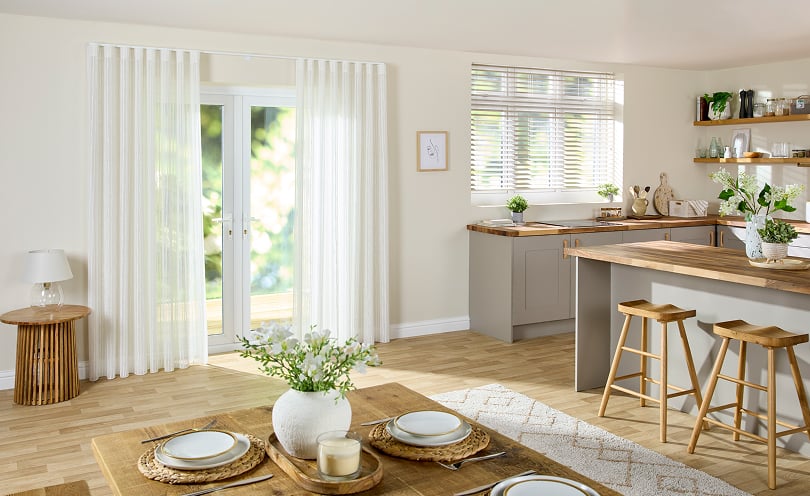













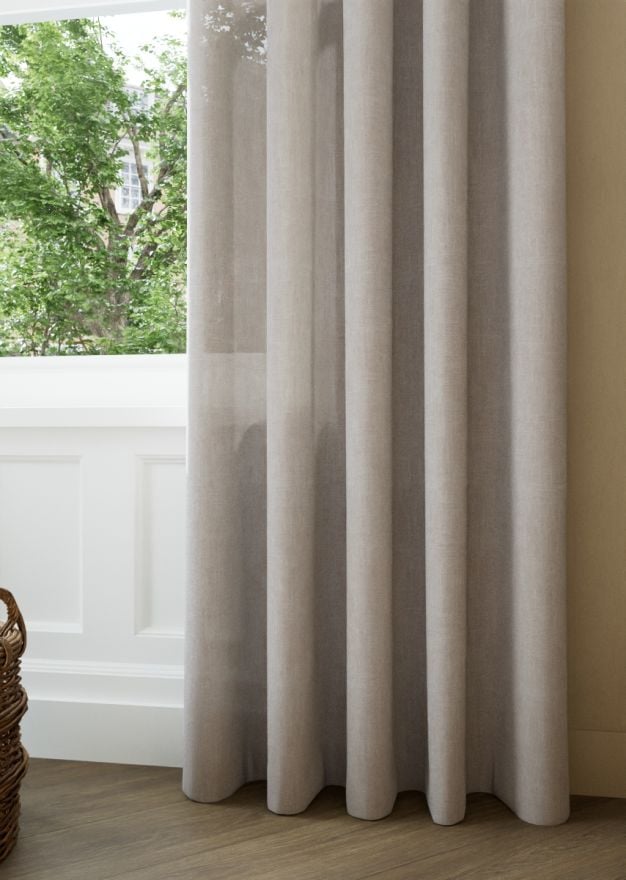







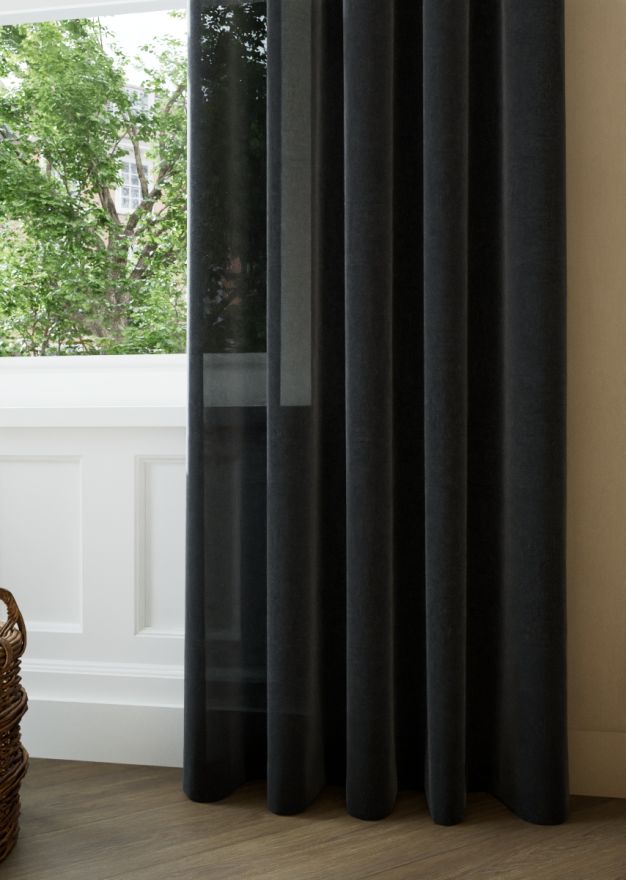






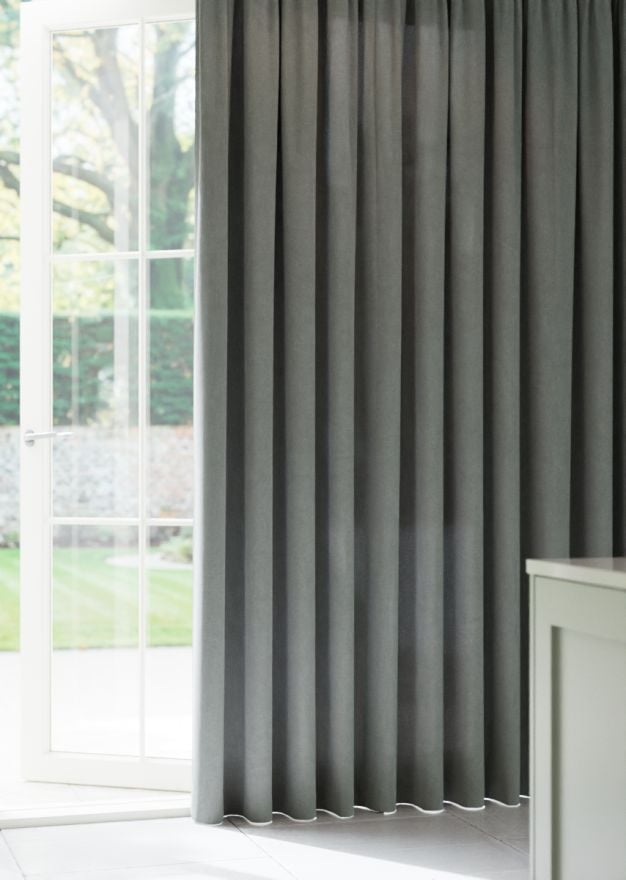










Voile curtains are lightweight, sheer curtains made from a fine, semi-transparent fabric. Unlike lined or blackout curtains, voiles are designed to let natural light through while providing a soft level of daytime privacy — people outside cannot easily see in, but the room remains bright. They're typically used either alone in rooms where privacy is less critical, or layered with heavier curtains for a more complete window dressing.
How you hang voile curtains depends on the heading style you choose. Eyelet voiles thread directly onto a curtain pole — simply slide the pole through each ring and space the folds evenly by hand. Pencil pleat voiles use hooks that slot into a curtain track or onto pole rings — pull the cords to gather the heading before hanging. Pinch pleat voiles also hang on hooks, attaching to curtain rings on a pole or runners on a track. For layering voiles with heavier curtains, a double pole or double track is the easiest solution regardless of heading — the voile sits on the inner pole or track closest to the window, with the heavier curtain on the outer. If you want a minimal look without a visible pole, a tension wire or café rod fitted inside the window recess is a popular alternative, typically used with a slot-top or eyelet voile.
Yes — layering voile curtains with heavier curtains is one of the most popular window dressing approaches. The voile provides daytime privacy and filters light softly, while the outer curtain can be drawn for full privacy or blackout at night. To do this neatly you'll need a double pole or double track so each layer can be drawn independently.
Voile curtains filter sunlight rather than block it, they soften and diffuse incoming light, reducing glare without plunging the room into darkness. If you want to fully block sunlight or UV, voiles alone won't achieve this and you'll need to layer them with blackout curtains. However, for simply reducing harsh direct sun while keeping the room feeling light and airy, voiles work well.